When people think about getting a second medical opinion, they often imagine visiting another surgeon, oncologist, or specialist.
However, one of the most important second opinions can happen behind the scenes, in the pathology laboratory.
Pathology is the medical specialty that examines tissue, cells, and laboratory samples to help determine the nature of a disease. In many cases, the pathology diagnosis plays a central role in treatment decisions.
When a diagnosis is rare, complex, or difficult to interpret, a pathology second opinion may provide additional expertise and clarity.
What Is a Pathology Second Opinion?
A pathology second opinion occurs when a tissue sample, biopsy, pathology slides, or pathology report is reviewed by another pathologist, often one with particular expertise in a specific disease area.
The purpose is not necessarily to challenge the original diagnosis. More often, it is to confirm the findings, provide additional insight, or help resolve areas of uncertainty.
In many cases, the second pathologist agrees with the original diagnosis. Even then, an independent review may provide additional reassurance for the patient and treating medical team.
Why Are Second Opinions Important?
Pathology is both a scientific and interpretative medical discipline. Pathologists may use microscopic examination, immunohistochemistry, molecular testing, and relevant clinical information to reach a diagnosis.
While many diagnoses are straightforward, some cases are particularly challenging and may benefit from subspecialist expertise. Diagnostic discrepancies can occur, especially in complex or uncommon cases, which is one reason expert review can be valuable in selected situations.
A second opinion may:
- Confirm a diagnosis before major treatment begins
- Clarify a difficult or unusual case
- Help identify rare or uncommon diseases
- Refine tumour classification or grading
- Provide additional information that may influence treatment planning
- Increase confidence for patients and clinicians
When Is a Pathology Second Opinion Usually Recommended?
Not every pathology case requires a second opinion. Many common conditions can be diagnosed confidently by the original reporting pathologist.
However, an additional review may be considered in situations such as:
Rare Diseases
Rare diseases may be encountered relatively infrequently in general pathology practice. A subspecialist who regularly reviews a particular disease category may therefore provide additional experience relevant to a difficult case.
Cancer Diagnoses
Some cancer centres routinely review outside pathology material before major treatment begins. This can help confirm important diagnostic information such as tumour type, grade, biomarkers, and other features relevant to management.
Difficult or Borderline Cases
Certain lesions can fall into a diagnostic grey zone between benign, intermediate, and malignant disease, or between different disease categories. Subspecialist review may help clarify these challenging cases.
Unexpected Results
If pathology findings do not fit the clinical picture, imaging findings, or other available information, an additional review may help determine whether the findings are concordant.
Specialised Areas of Pathology
Subspecialty expertise can be particularly valuable in areas such as:
- Breast pathology
- Dermatopathology
- Haematopathology
- Neuropathology
- Soft tissue and bone pathology
- Paediatric and perinatal pathology
- Cardiac pathology
Can a Second Opinion Change a Diagnosis?
Sometimes it can.
Many second-opinion reviews confirm the original diagnosis. However, diagnostic refinements or changes can occur and may sometimes affect patient management.
Examples may include:
- Reclassifying a tumour subtype
- Revising a tumour grade
- Identifying additional diagnostic features
- Recommending additional testing, including immunohistochemical or molecular studies
- Confirming or excluding malignancy
Because important treatment decisions may depend on pathology findings, clinically significant diagnostic changes can influence subsequent management.
The Digital Pathology Revolution
Traditionally, obtaining a pathology second opinion often involved physically sending glass slides to another hospital or specialist centre. Depending on distance and logistics, this could add time to the consultation process.
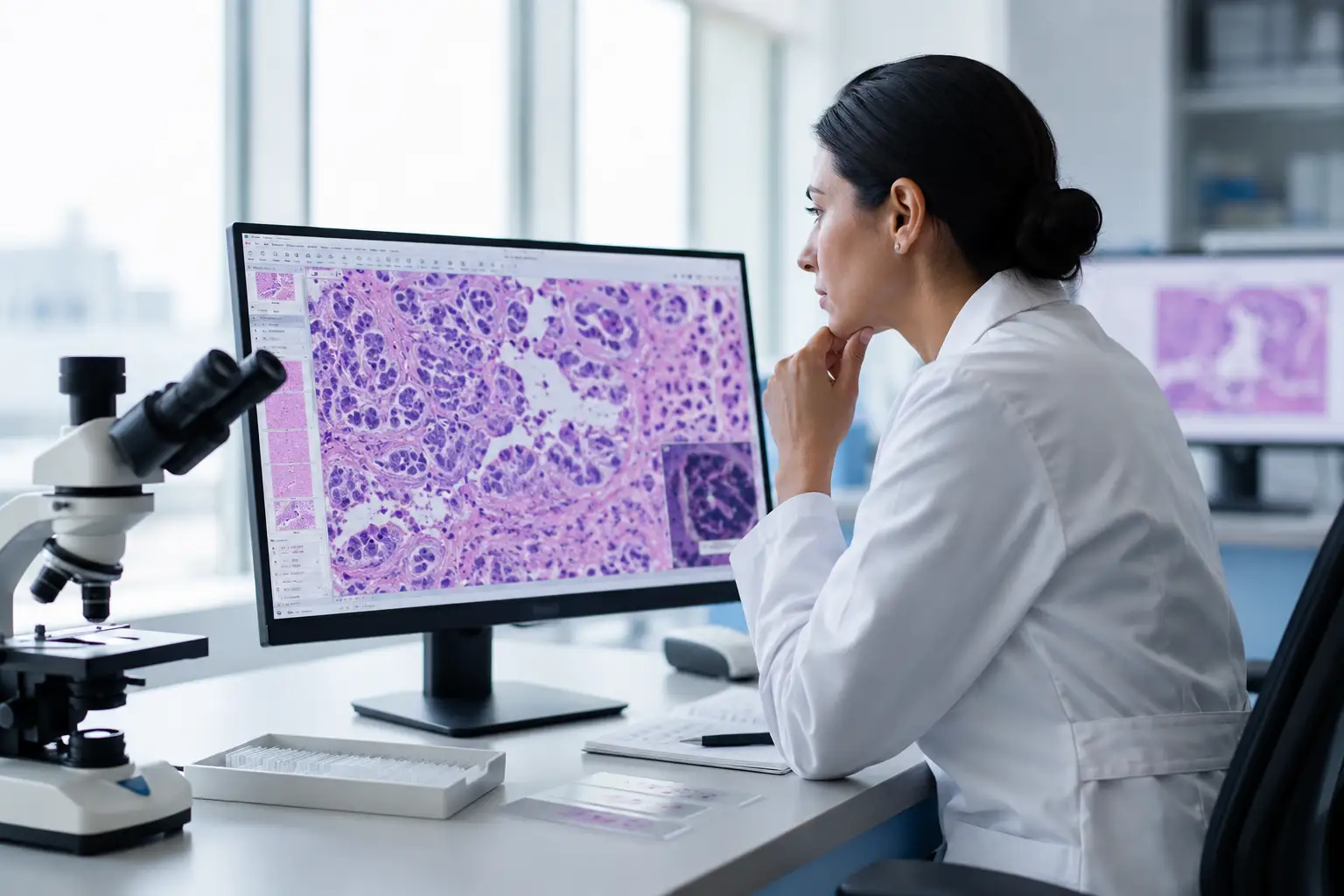
Digital pathology provides another option. Specialised scanners can convert glass slides into high-resolution digital images known as whole-slide images.
When an appropriately validated digital pathology system is used, these images can support remote diagnostic review and consultation. This can make it easier to share cases with subspecialist pathologists without physically transporting the original glass slides in every situation.
How Digital Pathology Expands Access to Expert Review
One of the key advantages of digital pathology is the ability to reduce geographic barriers to specialist consultation.
A case originating in a smaller hospital or a region without a particular pathology subspecialty may, where appropriate systems and regulations allow, be reviewed remotely by a pathologist with relevant expertise elsewhere.
This may be particularly valuable for rare cancers and other highly specialised conditions for which local expertise is limited.
Should Patients Consider a Second Opinion?
Patients can discuss the possibility of a pathology second opinion with their healthcare team, particularly if:
- They have been diagnosed with a rare disease
- The diagnosis is complex or uncertain
- Major treatment decisions depend on the pathology findings
- They would like additional reassurance before proceeding with treatment
Requesting an additional review does not necessarily imply concern about the competence of the original pathologist. Consultation between pathologists is an established part of medical practice, particularly for difficult or unusual cases.
Key Take-Home Messages
- A pathology second opinion involves review of pathology material or findings by another pathologist.
- Second opinions can be particularly useful for rare, complex, or diagnostically difficult conditions.
- An additional review may confirm the original diagnosis, provide further information, or occasionally result in a revised diagnosis.
- Accurate pathology is important because pathology findings often contribute directly to treatment planning.
- Validated digital pathology systems can support remote expert consultation and reduce some geographic barriers.
- Patients can discuss the value of a second opinion with their healthcare team when appropriate.
Final Message
High-quality patient care often depends on collaboration and access to appropriate specialist expertise.
Digital pathology is making remote consultation increasingly practical in appropriately validated settings. Whether a diagnosis is confirmed or refined, specialist review may provide additional confidence and information for subsequent clinical decisions.
By making pathology expertise easier to share between locations, digital technology can help reduce geographic barriers to specialist knowledge while supporting collaboration between healthcare professionals.
References
- Tresserra F, Colmenero I, Iglesias M, et al. Management of second opinions in pathology: Recommendations of the Spanish Society of Anatomical Pathology (SEAP). Rev Esp Patol. 2025;58(4):100837. doi:10.1016/j.patol.2025.100837
- Shepherd DJ, Gordetsky JB. Digital Pathology Allows for Global Second Opinions for Urologic Malignancies. Curr Urol Rep. 2025;26:28. doi:10.1007/s11934-025-01255-7
- Evans AJ, Brown RW, Bui MM, et al. Validating Whole Slide Imaging Systems for Diagnostic Purposes in Pathology. Arch Pathol Lab Med. 2022;146(4):440–450. doi:10.5858/arpa.2020-0723-CP
- College of American Pathologists. How to Read Your Pathology Report. CAP patient resource