Healthcare has advanced at an extraordinary pace. Medical imaging is more sophisticated, treatment is increasingly personalised, and clinicians can collaborate across distances in ways that were not possible a generation ago. Yet one challenge remains remarkably persistent: getting the right expertise to the right patient at the right time.
For many people, access to specialist healthcare is shaped by much more than cost. Geography, waiting times, referral pathways, the local distribution of subspecialists, travel requirements, language, digital access and the complexity of a condition can all affect how quickly a patient reaches the expertise they need.
This is not only a rural or low-resource problem. Even well-resourced health systems can experience uneven availability of highly specialised clinicians, particularly for rare diseases, complex cancers, unusual imaging findings or cases that require a second review by a subspecialist.
Digital healthcare cannot solve every access problem, and it does not replace emergency or in-person care when those are required. But used appropriately, it can make specialist knowledge easier to reach and can support better-informed conversations between patients and their treating clinicians.
What Limits Access to Specialist Healthcare?
Access is often described as a question of distance, but the reality is broader. A patient may live close to a major hospital and still face difficulty obtaining the particular expertise required for a complex case.
Common barriers include:
- Limited availability of subspecialist clinicians
- Long waiting times or multi-step referral pathways
- Uneven distribution of expertise between regions
- Travel, accommodation and time away from work or family
- Financial and logistical barriers
- Language, cultural or accessibility needs
- Digital connectivity and digital-literacy barriers
The World Health Organization has highlighted geographic inaccessibility and uneven distribution of health workers as persistent health-system challenges. Telehealth is one of several tools that can help extend access, but its value depends on appropriate implementation and accessible design.
Specialist Access Is Not Only a Rural Problem
Remote communities often face the most obvious access barriers, but specialist shortages and referral delays can also affect patients in large cities and high-income health systems.
Modern medicine is increasingly subspecialised. A radiologist, for example, may focus heavily on neuroradiology, musculoskeletal imaging, breast imaging or oncological imaging. Pathologists may develop similar depth in particular organs, tumour types or molecular techniques.
This concentration of expertise can be extremely valuable, but it also means that the best-matched clinician for an unusual case may not be available within a patient’s immediate local network.
For patients, the practical consequence can be a choice between waiting, travelling, accepting a more general review, or seeking another opinion elsewhere. Digital specialist care creates an additional route: moving the information securely rather than requiring the patient to travel solely for the expert review.
Why Remote Communities Face Greater Barriers
For people living in rural or remote regions, the same challenges are often amplified. A specialist appointment may require several hours of travel, an overnight stay, time away from work, childcare arrangements or repeat journeys for follow-up.
Research on telemedicine has consistently identified its potential to reduce geographic and logistical barriers to care. A 2024 review in Cureus described telemedicine as a tool that can help address geographic, financial, sociocultural and infrastructure-related barriers to healthcare access. However, the benefits are not automatic: connectivity, digital literacy, privacy, accessibility and clinical suitability all matter.
The most useful role for digital care is therefore not simply to replace a face-to-face appointment. It is to create an additional route to appropriate expertise when remote review is clinically suitable.
Why Specialist Second Opinions Matter
A specialist second opinion is not about replacing the relationship between a patient and their healthcare team. Instead, it provides an opportunity for another qualified expert to review complex information, confirm findings and offer additional perspective when needed.
This can be particularly valuable when a diagnosis is rare, treatment decisions are significant, imaging findings are difficult to interpret, or a patient simply wants greater confidence before moving forward.
In many areas of medicine, specialist expertise is highly focused. A clinician who regularly manages a specific type of condition may recognise patterns, uncommon findings or treatment considerations that may not be encountered frequently in general practice.
Second opinions are especially important in fields where interpretation plays a major role, including:
- Medical imaging and radiology
- Pathology and tissue diagnosis
- Rare diseases and genetic conditions
- Complex cancer diagnoses
- Specialised treatment planning
For example, a radiology second opinion allows an experienced imaging specialist to review scans such as MRI, CT or ultrasound examinations and provide additional interpretation when appropriate.
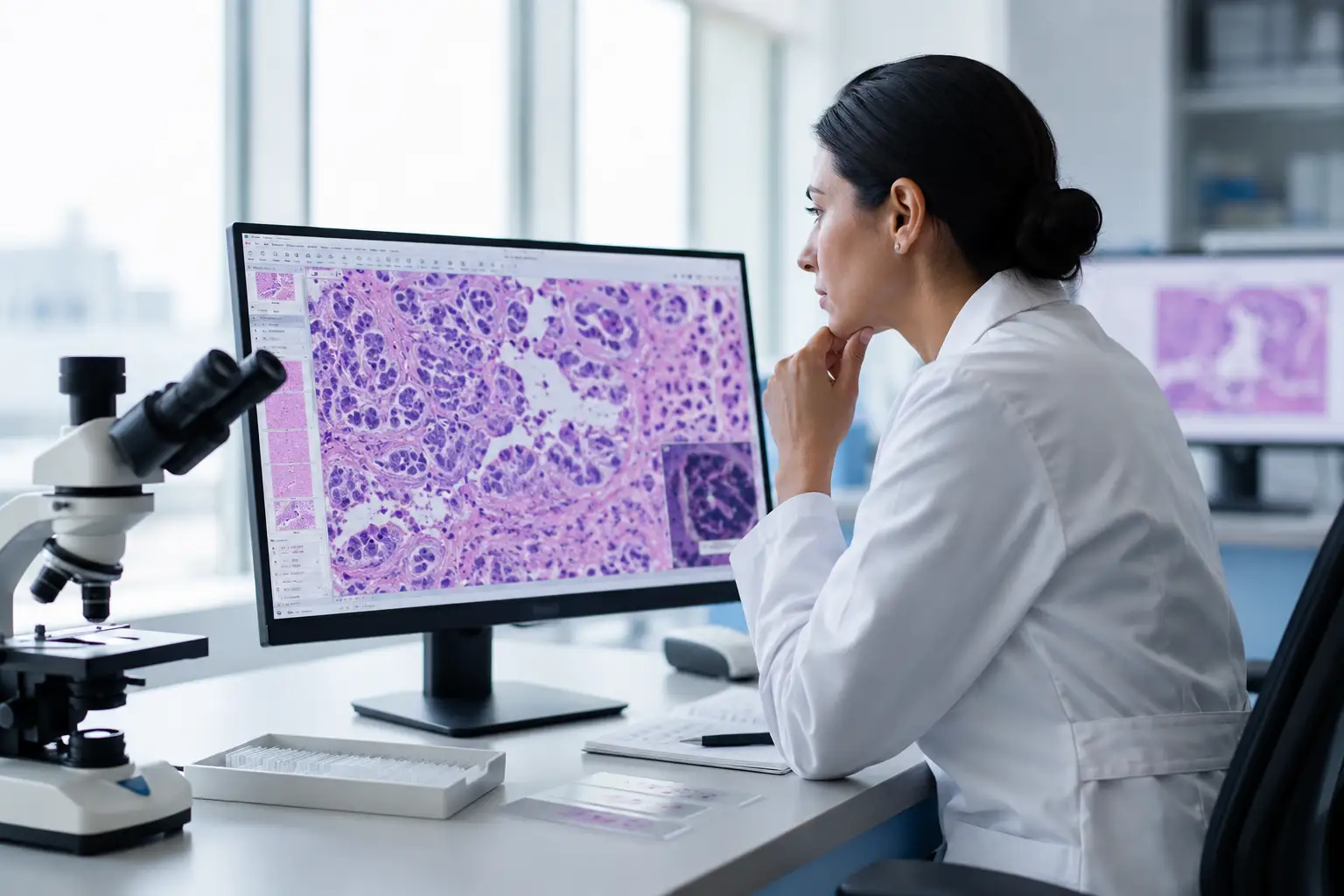
Similarly, a pathology second opinion can provide expert review of biopsy samples, pathology reports or complex diagnoses where specialist interpretation may influence future care decisions.
How Digital Healthcare Expands Access to Specialist Expertise
Traditionally, accessing a specialist often meant travelling to a specific hospital or medical centre where that expertise was available. For patients living far away, this could create additional delays and practical challenges.
Digital healthcare changes this model by allowing medical information to move securely between patients, clinicians and specialists, regardless of physical location.
Instead of travelling thousands of kilometres for an initial expert review, patients may be able to share relevant medical information digitally and receive guidance from specialists who may otherwise be inaccessible.
This approach is particularly meaningful for:
- Patients living in rural or remote communities
- Individuals seeking expertise that is not available locally
- People managing rare or complex conditions
- Patients requiring additional confidence before major treatment decisions
- Families seeking access to specialised knowledge across borders
Digital platforms can support collaboration between specialists and help healthcare systems make expert knowledge more accessible. The goal is not to replace local healthcare, but to connect patients with the right expertise when additional input is needed.
What Can Digital Specialist Care Include?
Digital specialist healthcare can take different forms depending on the clinical situation, the type of information available and the expertise required.
Examples include:
- Remote specialist reviews: Experts review medical records, imaging studies, pathology reports or other clinical information.
- Online consultations: Patients communicate directly with specialists through secure video appointments.
- Multidisciplinary collaboration: Multiple experts contribute perspectives on complex cases.
- Digital diagnostic review: Medical images and pathology materials can be shared securely for specialist interpretation.
For imaging-based cases, digital healthcare enables specialists to review high-quality medical images remotely. This has become increasingly important as healthcare systems adopt advanced digital imaging and secure information-sharing technologies.
At Hospitual, our platform is designed to connect patients with experienced specialists for specialist reviews and online medical consultations, helping make expert healthcare knowledge more accessible across geographical boundaries.
Challenges and Considerations in Digital Healthcare
While digital healthcare has created new opportunities for accessing specialist expertise, it is important to recognise that technology alone does not replace clinical judgement or personalised medical care.
High-quality digital healthcare depends on several important factors, including secure handling of medical information, reliable technology, appropriate specialist expertise and clear communication between patients and healthcare professionals.
Patients considering digital specialist care should look for services that:
- Connect patients with appropriately qualified specialists
- Use secure systems for handling medical information
- Provide clear explanations of findings and recommendations
- Work alongside, rather than replace, existing healthcare relationships
Digital healthcare works best when technology supports the expertise of healthcare professionals and helps patients access the right knowledge at the right time.
The Future of Connected Specialist Care
The future of healthcare is increasingly connected. Advances in digital platforms, medical imaging, electronic health records and secure communication tools are making collaboration between specialists easier than ever before.
Rather than expertise being limited by geography, healthcare is moving towards a model where knowledge can be shared more freely between patients and specialists around the world.
This shift has the potential to improve access to specialised care, particularly for patients with rare diseases, complex diagnoses or conditions requiring highly specific expertise.
In the future, digital healthcare may further support:
- Faster access to specialist opinions
- Greater collaboration between medical experts
- More personalised healthcare pathways
- Improved communication between patients and healthcare teams
- Better access to expertise across international borders
The goal is not simply to make healthcare digital. The goal is to make high-quality expertise more accessible, connected and patient-centred.
Key Take-Home Messages
- Specialist expertise can be difficult to access, especially for patients with complex or rare conditions.
- Digital healthcare helps connect patients with specialists regardless of geographical location.
- Second opinions can provide reassurance, additional insight and support better-informed healthcare decisions.
- Radiology, pathology and other specialist fields can benefit significantly from secure digital collaboration.
- Technology should support healthcare professionals and improve access to expertise, not replace clinical judgement.
- The future of healthcare is moving towards more connected, personalised and accessible specialist care.
Final Message
Access to specialist healthcare should not depend only on where a person lives. Digital healthcare is helping remove geographical barriers and creating new opportunities for patients to connect with expert medical knowledge.
Whether someone needs reassurance about a diagnosis, a review of medical information or guidance from a specialist in a particular field, digital platforms can help make expert care more accessible.
By combining medical expertise with secure digital technology, healthcare can become more connected, collaborative and focused on what matters most: helping patients receive the right information and support when they need it.
References
- World Health Organization. WHO guideline on health workforce development, attraction, recruitment and retention in rural and remote areas. 2021. WHO publication
- Anawade PA, Sharma D, Gahane S. A comprehensive review on exploring the impact of telemedicine on healthcare accessibility. Cureus. 2024;16(3):e55996. doi:10.7759/cureus.55996
- World Health Organization and International Telecommunication Union. Implementation toolkit for accessible telehealth services. 2024. WHO publication
Need expert guidance for your medical case?
Explore Hospitual’s specialist review services and connect with experienced healthcare professionals for expert opinions and online consultations.