What Is Breast MRI?
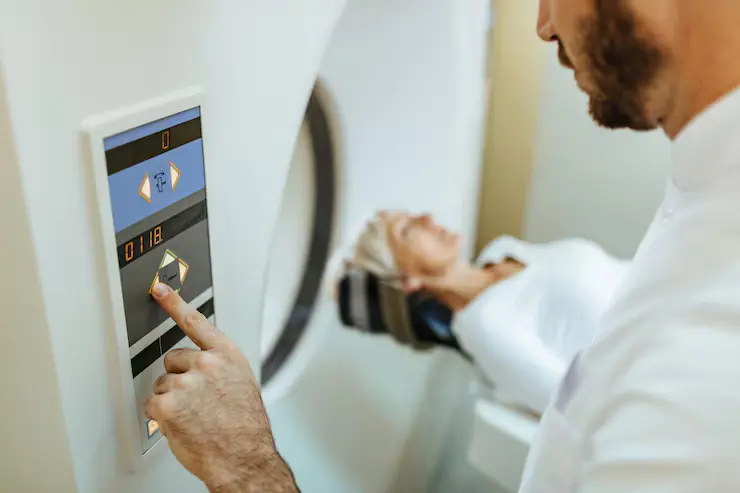
Breast MRI is one of the most advanced imaging technologies used in modern breast cancer detection and evaluation. Unlike mammography, which uses X-rays, Breast MRI uses powerful magnetic fields and contrast-enhanced imaging to create highly detailed pictures of breast tissue. It is especially effective in detecting cancers that may be difficult to see on mammography or ultrasound — particularly in women with dense breasts or higher cancer risk.
Breast MRI is not simply another imaging test. It is a highly sensitive tool that can:
- Detect hidden tumors
- Evaluate the exact size and extent of cancer
- Assess whether cancer has spread within the breast
- Monitor response to chemotherapy
- Help guide surgical planning
Today, Breast MRI is increasingly used in leading cancer centers around the world as part of personalized breast cancer care.
Why Breast MRI Is Gaining Attention?
Exceptional Sensitivity
Breast MRI is more sensitive than mammography or ultrasound for detecting many breast cancers, especially:
- Invasive lobular carcinoma
- High-grade DCIS (ductal carcinoma in situ)
- Multifocal or multicentric disease
- Cancer hidden in dense breasts
Better Tumor Mapping Before Surgery
Breast MRI helps doctors evaluate the true size and extent of tumors more accurately than clinical examination, mammography, or ultrasound.
This can:
- Improve surgical planning
- Reduce repeat surgeries
- Help determine whether breast-conserving surgery is possible
Powerful for High-Risk Screening
For women at high genetic or familial risk, Breast MRI has become one of the most important screening tools available.
MRI screening is strongly recommended in many women with:
- BRCA1 or BRCA2 mutations
- Strong family history of breast cancer
- Prior chest radiation at young age
Advanced Monitoring During Chemotherapy
One of the most exciting uses of Breast MRI is monitoring response to treatment.
MRI can:
- Measure tumor shrinkage
- Evaluate treatment effectiveness early
- Predict complete response to chemotherapy
- Help personalize treatment decisions
Compared with mammography or ultrasound, MRI is often more accurate after chemotherapy because it better distinguishes residual tumor from scar tissue or fibrosis.
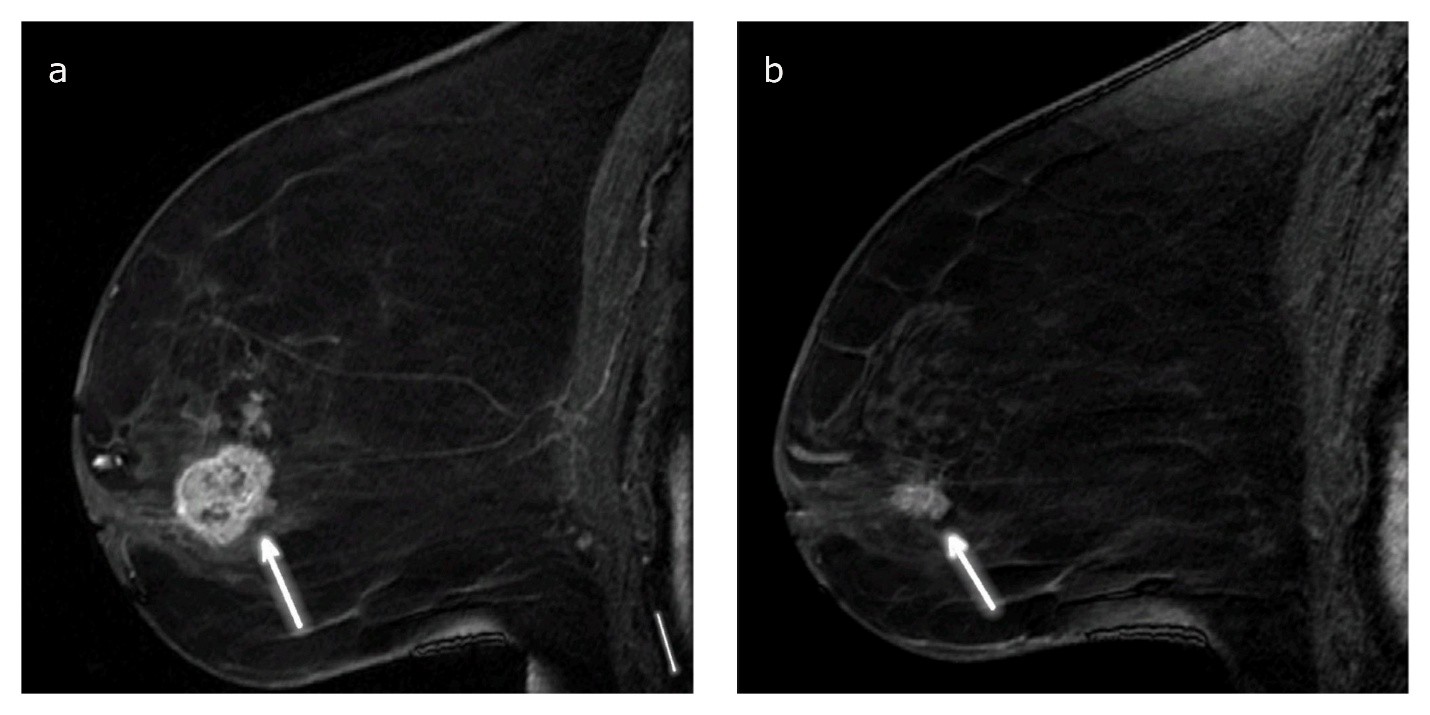
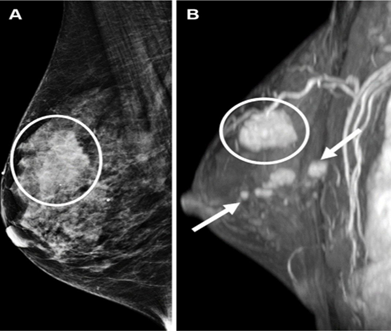
MRI helps doctors evaluate whether treatment is working: a: Before chemotherapy, b: Tumor shrinkage after treatment
Who May Benefit Most from Breast MRI?
Breast MRI may be especially helpful for:
- Women with dense breasts
- Individuals with high genetic risk
- Patients with newly diagnosed breast cancer
- Women undergoing chemotherapy
- Patients needing second opinions on imaging findings
- Cases where mammography or ultrasound findings are unclear
Need Expert Breast Imaging Review?
Our specialists can help you with:
- Online breast imaging consultation
- Breast MRI second opinion
- Teleradiology review
- Personalized screening guidance
- Evaluation of mammography, ultrasound, and MRI findings
Upload your imaging securely and receive expert evaluation remotely.
References
- Mann RM, Cho N, Moy L. Breast MRI: State of the Art. Radiology. 2019;292(3):520–536. doi:10.1148/radiol.2019182947
- Brown AL, Vijapura C, Patel M, De La Cruz A, Wahab R. Breast Cancer in Dense Breasts: Detection Challenges and Supplemental Screening Opportunities. RadioGraphics. 2023;43(10):e230024. doi:10.1148/rg.230024